
Bedrock
The ground beneath the beginning
The meaning of a life
is not always found
in why things happened,
but in the relationships
that become visible among them
when we have lived far enough
to see their shape.
In 1990, a writing assignment
for Marriage and the Family
became an opening.
I titled the paper
“Black Sheep and Kissing Cousins”
and began with the family I knew.
On the page,
thoughts my mother had censored
acquired a voice.
Within my own sentences,
I began to recognize a self
I had scarcely been allowed to express.
Writing became a practice of discernment:
hearing what I had absorbed
and discovering what I could say
from within my own experience.
I returned to
journals,
photographs,
family records,
and the memories
held in my body.
Each return disclosed
another relationship
among the things I had lived.
Every landscape rests on bedrock.
Beneath the beginning of my life
lay lives already underway—
their griefs,
devotions,
silences
settling into the ground
I would learn to call my own.
Years after my mother died,
I opened boxes of her photographs.
Later came the 1934 front-page headlines
about her father,
the court records,
and a poem she had addressed to God
at about thirteen,
after her father abandoned the family.
She titled it “Old Satan He’s My Dad.”
The girl in the photographs
and the mother I remembered
began to occupy the same history.
Her generation’s silence
acquired a context.
Through lives that preceded mine,
I could trace how her history
had become an authority over my own—
shaping the demands placed upon me
and the life I was permitted to imagine.
I remembered my grandmother, my aunt,
and my mother speaking in hushed tones.
The records gave substance
to what I had once known
only as an atmosphere.
I remembered their singing, too.
At bedtime in Aunt Betty’s white Victorian home,
my grandmother sat on the edge of the bed
and strummed an old guitar.
My aunt and mother sang harmony to
“Will the Circle Be Unbroken.”
Their voices brought a calm I could feel.
In that shared moment,
my mother’s voice opened a passage
into a gentleness I had seldom known.
For once, I could rest in her presence.
That unfamiliar peace was a rare treasure.
The same voices carried family shame
in their hushed conversations
and tenderness in their singing.
Their tenderness belonged to my inheritance.
Compassion for my mother grew
alongside a more faithful account
of my experience as her daughter.
Each life required
its own witness.
As I made room for both,
the family story gained depth.
Water follows
the grooves it meets.
Within a family,
repeated ways of
loving,
fearing,
protecting,
and keeping silence
become channels of belonging.
A child learns their course
before she can discern the history
that shaped them.
Writing opened a way
to distinguish the voices
within my inheritance
and choose
what I would carry forward.
For Your Own Terrain
BEDROCK
Pattern Persistence
Field Notes:
ENTRENCHED MEANDER
A river’s winding course can remain
as the land rises
and the water cuts
deeper into rock.
The earlier bends
become entrenched
within a canyon.
At the Goosenecks
of the San Juan River in Utah,
the landscape preserves the shape
of a course established long before.
Landscapes hold
the consequences
of what has passed
through them.
So do we.
Within a family
A response learned early
can become the course we follow:
reading another’s mood,
concealing a need,
assuming responsibility,
keeping the peace.
Repeated within relationships,
that response can become
a family expectation.
A child grows into the place
the family has learned to give them.
What channels run through your ground
that you did not carve?
—
Whose voice speaks within you
with the authority of your own—
and what happens
when you listen for the difference?
—
Where might you begin
to respond differently—
and what would help you sustain that choice
amid the pull of belonging?
A FURTHER BEARING
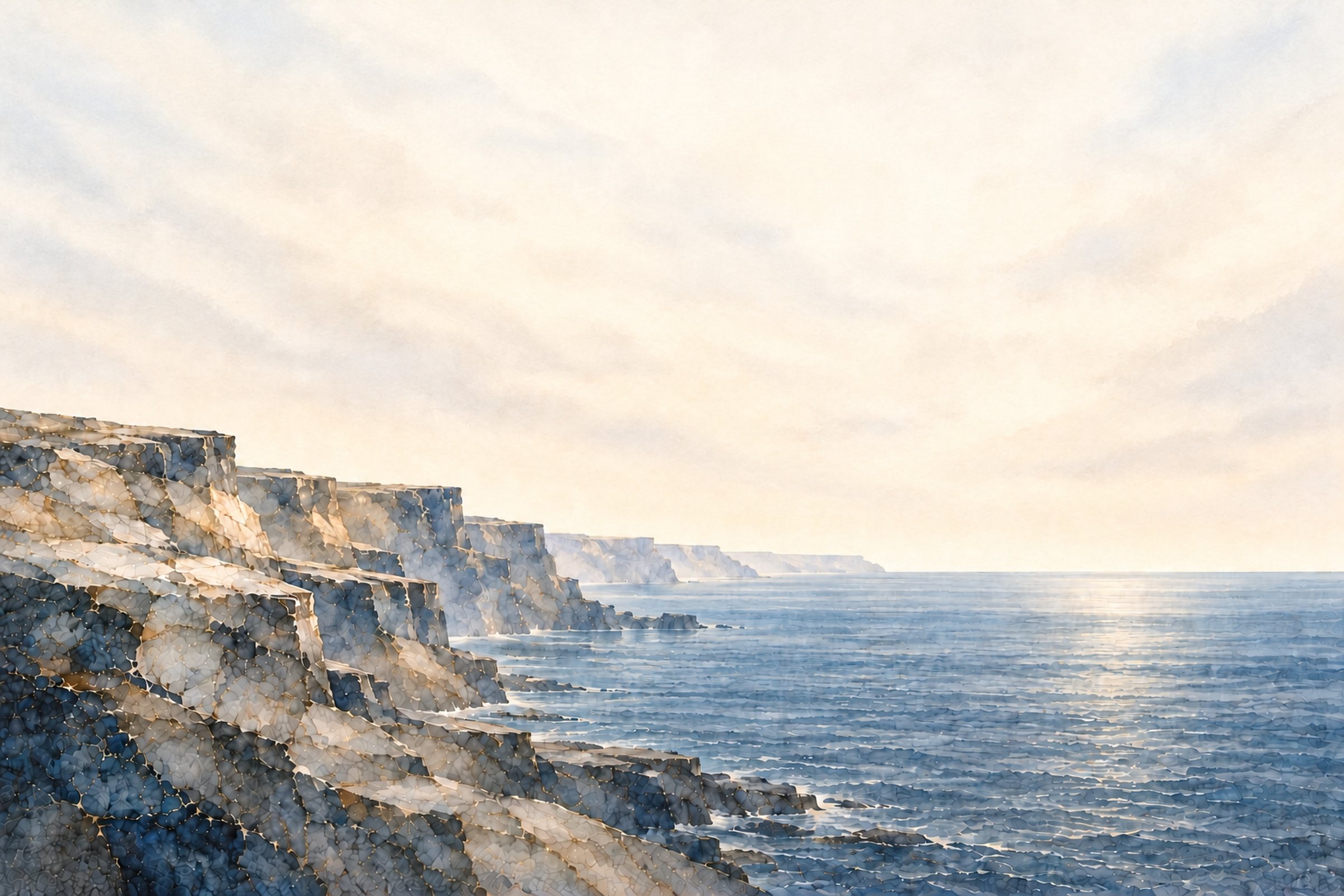
At the Goosenecks,
the San Juan River
has cut through rock
formed more than
300 million years ago.
The canyon walls contain
limestone, sandstone,
siltstone, and shale—
evidence of an ancient
marine environment.
A river reveals
the record of a sea
that preceded it.
Within a family, too,
an inquiry into the present
can disclose
an earlier world:
a photograph,
a letter,
a court record,
a remembered voice
giving context
to what we first knew
as atmosphere.
Learning what another person
lived through
can deepen our understanding
of what reached us
through them.
Their experience
acquires a context.
Our own experience
retains its witness.
The history grows fuller
as each life
comes into view.