
The Bluffs
The ground was familiar.
What it would ask of me
was still unfolding.
I earned a 4.0 in Marriage and the Family
during the semester my own marriage ended.
The course gave me words
for what we had been living.
In a moment of anagnorisis,
I read descriptions of relationships
and recognized our loneliness.
On paper, I began to articulate the needs
I had struggled to express within our marriage.
I was thirty-four.
For more than fourteen years, marriage,
faith, and ministry had formed
the world I inhabited.
When my husband left,
the loss moved through all three.
For what followed,
I coined the name Plexiglas Prison.
My former life remained visible
on the other side of a transparent wall.
Its familiar arrangements taunted me.
From behind the Plexiglas,
I could see what I had belonged to
while trying to comprehend
the life that was becoming mine.
One day, driving north on I-29,
I lowered the window
and shouted toward heaven in distress.
“Your yoke is supposed to be easy
and your burden light,
but that is not what I feel from you.”
I had given years to the pursuit of a faithful life.
Now I needed to encounter the God
to whom I had entrusted it.
That encounter unfolded
through the years that followed.
I worked.
Studied.
Grieved.
Learned to provide for myself.
Decisions became mine to make,
and I lived with what they asked of me.
One winter night, after Sunday evening church,
I went out for hot chocolate with a friend.
We talked until midnight.
Outside, the snow kept falling.
By the time I reached home, the hill was buried.
I tried driving my red Audi up the steep incline.
When that failed, I tried backing up—
the maneuver that had carried me uphill
on other slippery nights.
This time, neither worked.
At last, I parked at the bottom.
I pulled on my boots,
buttoned my coat,
wrapped my scarf around
my head and neck.
The hill was difficult enough in summer.
Looking toward the house,
I wondered how I would manage
it in this weather.
“The ascent was mine to make.”
Against the cutting wind,
I lowered my head and began to climb.
One foot.
Then the other.
After a stretch,
I stopped and looked back.
A quarter of the hill
lay behind me.
“Look how far I have come.”
Then I turned toward the sharp bend above me.
My father was standing there.
Past midnight.
I had expected him to be asleep.
Concern for me had kept him awake.
He had been watching for my headlights;
when they appeared,
he had come down the hill to help.
Until I saw him,
I had imagined only the distance
I would have to cover alone.
As I stood below him,
I felt the Holy Spirit speak within:
“I watch for you, too.”
The hill became a picture of the journey before me:
the effort of each step,
the distance already traveled,
the help I could see only when I lifted my head.
I heard the Voice:
“El Roi. The God who sees.”
I would remember where my father stood.
Fear and grief would still threaten
to immobilize me.
There would be mornings
when I wanted to pull the covers
over my head and withdraw
from everything my life now required.
The memory of that night would return:
I had looked behind me
and discovered how far I had come.
I had looked ahead and found my father
already on the hill.
For Your Own Terrain
THE BLUFFS
Patterns Under Strain
Field Notes:
LOESS
Fine particles of silt
carried by wind
can accumulate
in deep deposits.
This sediment, called loess,
can hold steep faces
when dry.
When wet,
it becomes vulnerable
to erosion and collapse.
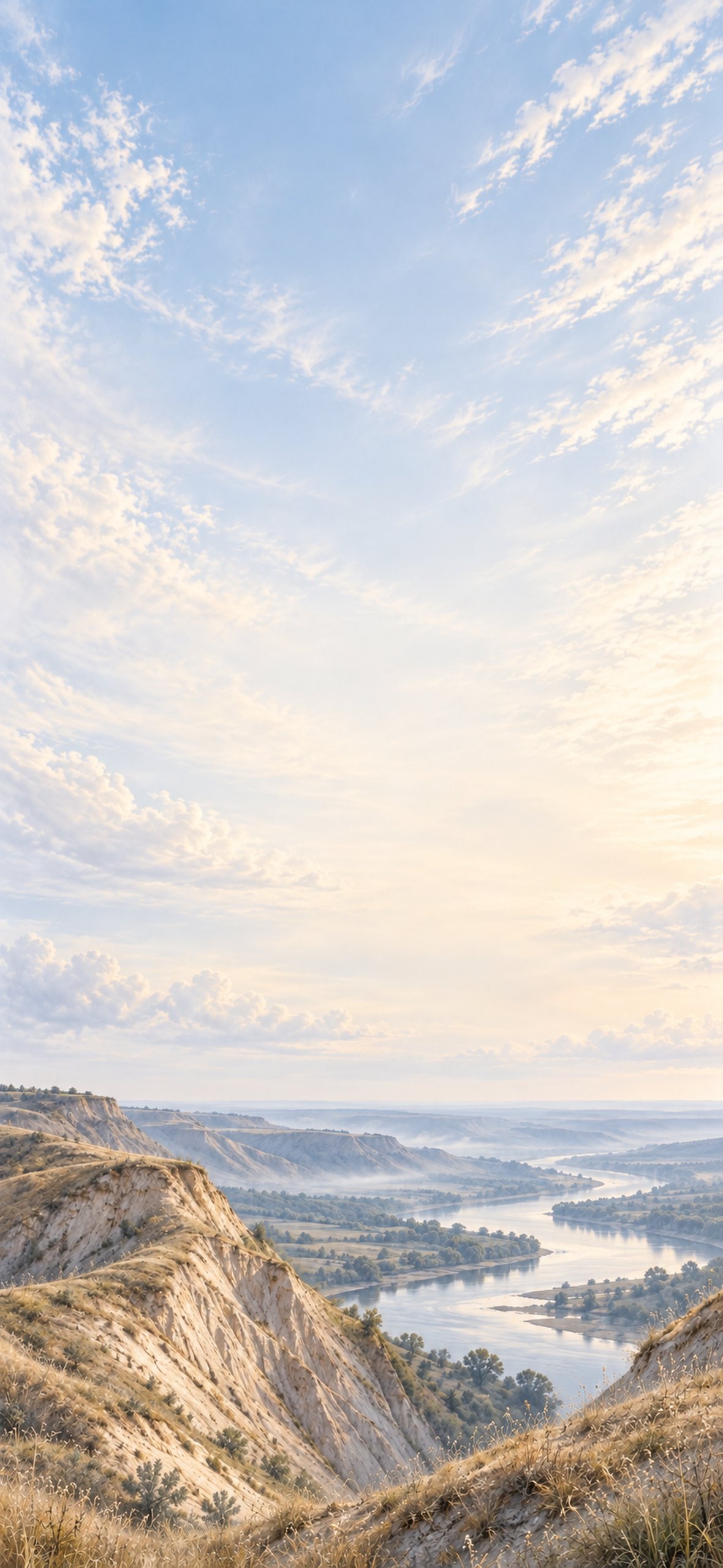
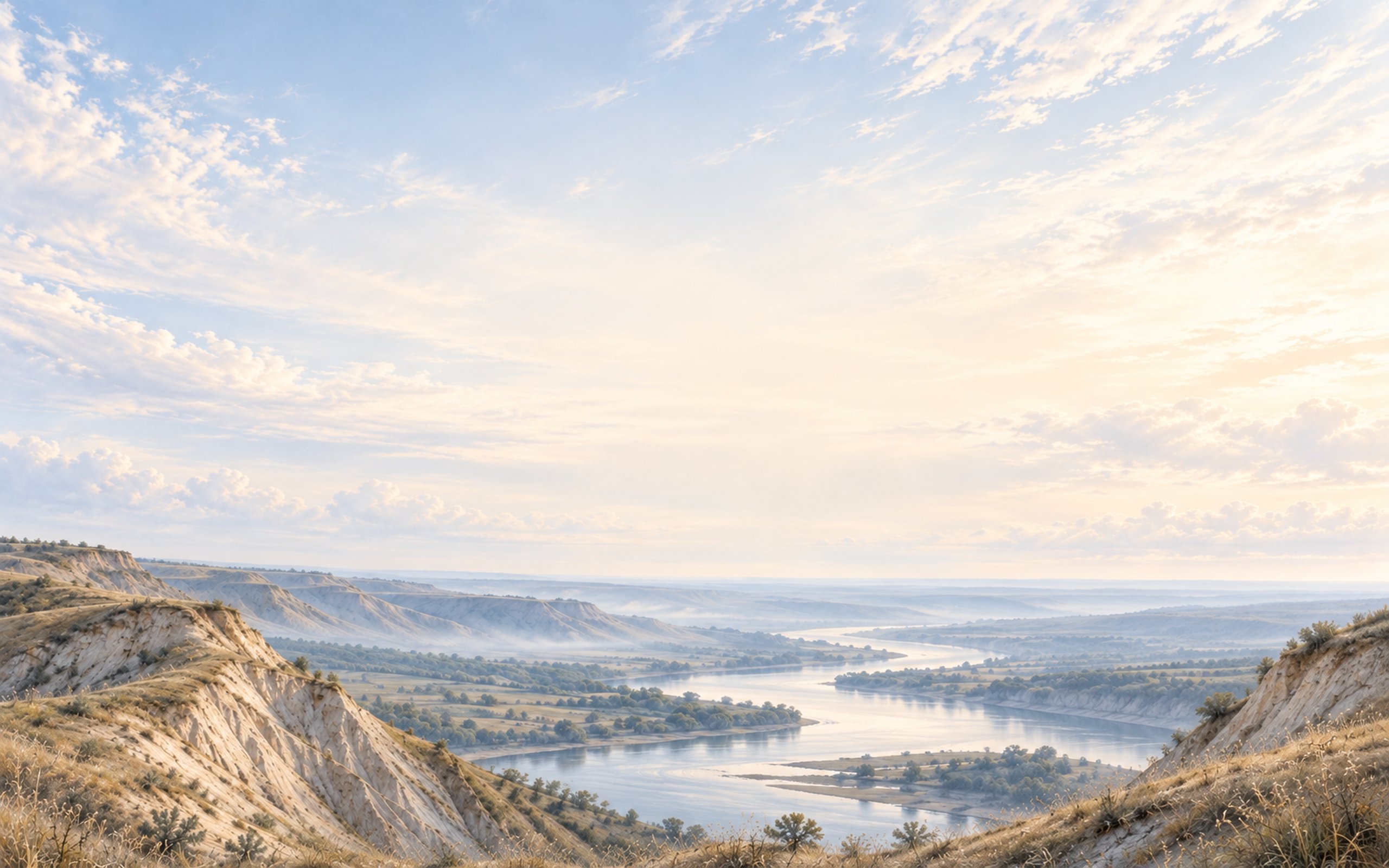
Along the Missouri River’s eastern valley,
the Loess Hills extend north and south—
from near Sioux City
to St. Joseph, Missouri.
Wind gathered fine silt
from the river’s floodplain
and deposited it over thousands of years.
Water cut gullies and ravines.
Gravity shifted the slopes.
A couple of miles north of Council Bluffs,
my home stood on one of those bluffs.
That winter night,
this was the ground beneath my boots—
a steep ascent through falling snow,
my father waiting
at the bend above.
Ground that appears firm
can give way
as conditions change.
So can we.
Within a family
A family teaches its members
how distress is to be carried:
spoken aloud,
contained in silence,
answered with action,
entrusted to another.
Under strain,
familiar responses
can become more insistent.
One person seeks an answer;
another withdraws;
a third tries
to restore calm.
When the arrangements
that held a life together
begin to give way,
we may recognize
how much we have carried
and where we need support.
Care may reach us
through a familiar relationship
or through someone
newly entering our lives.
Being accompanied
can change how we meet
what remains ours to face.
When familiar ground becomes uncertain,
what do you find yourself doing—
and what need lies beneath that response?
—
What if the God you cry out to
is also reaching through you—
in the longing that persists
when you cannot yet imagine tomorrow?
—
When the ascent feels beyond you,
what support could help you find your footing—
and whom might you let know you need it?
A FURTHER BEARING
Across prairie landscapes,
deep, interwoven roots
help hold soil in place.
Plowing removes
that living network,
leaving the ground
more exposed to erosion.
At Homestead National
Historical Park in Nebraska,
restored prairie reveals
the relationship
between the soil
and what holds it.
Steadiness can reside
in a network of support
beneath the surface.
Within a life, too,
relationships can help
sustain our footing:
someone who listens,
someone who notices,
someone who comes
partway down the hill.